

How to Layer Men's Necklaces: Lengths, Chain Styles and Less Tangling
The simplest way to layer men's necklaces is to start with two pieces: one shorter chain and one longer chain or pendant necklace. Give them enough space to read as separate layers, then change one detail at a time until the combination feels right with your clothes.
You do not need to buy a complete new stack. Start with the necklace you already wear and work out what a second piece should add: texture, a focal point or a different position on the chest.
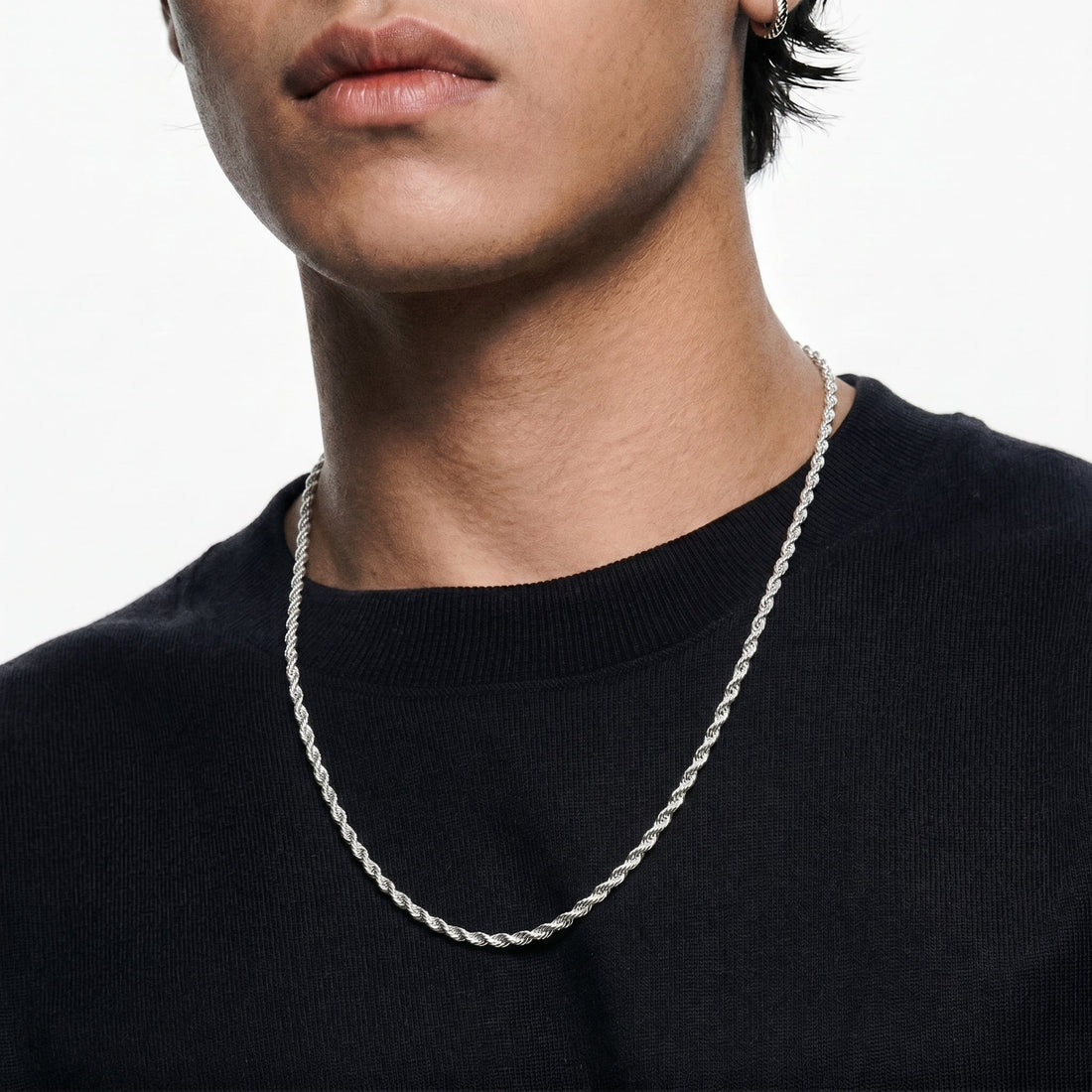
SILAS shown on its own. Use the rope-chain texture as a reference when planning a second layer.
1. Choose the Piece You Want People to Notice
Put on your usual necklace with the T-shirt or shirt you intend to wear. Decide whether that necklace should remain the main feature.
If it has a noticeable pendant or a strong link pattern, choose a quieter second piece. If your first chain is understated, a second chain can bring more texture without both pieces demanding attention.
A useful check is to look in the mirror from a normal conversation distance. Can you still identify each necklace? If the combination looks like one crowded strip of metal, simplify it before adding anything else.
2. Separate the Lengths, Then Check the Actual Fit
Different listed lengths are a starting point, not a guarantee of a clean gap. Neck size, the shape of the chain and any pendant all affect where a necklace sits.
Try the shorter necklace first. Add the longer piece and check whether the two stay visually separate when you turn your head or lean forward. The aim is comfortable separation, not a fixed number that everyone must follow.
Our 50cm vs 55cm necklace length guide shows individual fit references and explains how to compare lengths before buying. Use it to decide where you want each layer to sit; keep this article for choosing how the pieces work together.
If both chains fall on the same line, try a different length or a suitable extender. Do not force a combination that only looks separate when you stand perfectly still.
3. Change the Texture, Not Everything at Once
Different chain structures can make a two-chain combination easier to read. For example, you might pair a restrained box-chain design with a rope chain for contrast.

Layering illustration based on original photography and modified with AI. Shown for texture and styling inspiration, not as a measured length comparison. Actual fit may vary.
Start with a similar metal tone if you want fewer decisions to make. Mixing tones is also an option, but try the arrangement in daylight and with your normal clothes rather than treating a styling rule as compulsory.
For a first stack, change one variable at a time:
- Keep the tone similar and change the chain structure.
- Keep the structures simple and introduce one pendant.
- Keep your favourite chain and experiment with the second length.
Compare the individual designs in our KORE, SILAS and ROLAND necklace guide before choosing a pairing. A difference in appearance does not mean two chains have been tested together for tangling.

ROLAND shown individually. This is a product reference, not a photographed layering combination.
4. Try One of These Two Starting Combinations
| Combination | How to build it | What to check |
|---|---|---|
| Two plain chains | Use different lengths and contrasting link structures, such as box and rope | Both chains remain visible without repeatedly crossing |
| Plain chain and pendant necklace | Keep the plain chain visually quiet and give the pendant room below or apart from it | The pendant does not repeatedly strike, catch or pull on the other chain |
These are styling ideas, not guarantees of compatibility. Check the available lengths and how the pieces behave on you.
If you are moving a separate pendant onto a chain, check its attachment opening, the chain's end fittings and the suitability of the chain for that pendant. A clasp may be wider than the chain itself. Do not force it through or assume every plain chain can carry every pendant.
5. Check the Neckline Before You Leave
A stack that works against an open shirt may sit differently with a crew neck. Try the actual outfit, including any jacket you expect to wear.
Move your shoulders, sit down and look again. Notice whether a collar hides the shorter chain, catches a pendant or pushes the two layers together.
There is no requirement to wear everything outside your clothing. Choose the arrangement you prefer, provided it stays comfortable and does not repeatedly snag.
6. Reduce Tangling Without Expecting a Perfect Fix
No chain pairing is guaranteed to stay tangle-free. Movement, hair, clothing, clasps and the pieces themselves can all affect what happens during wear.
Use this checklist:
- Fasten each necklace separately and check that the clasps are secure.
- Start with a visible difference between the wearing positions.
- Try the combination at home before wearing it for a full day.
- If the chains keep crossing, change one length or remove one piece.
- Store necklaces separately instead of dropping them into the same loose pile.
A necklace separator may help organise some combinations, but check that its fittings work with your necklaces. It adds hardware and does not guarantee that the chains will never cross.
If a knot forms, take the necklaces off and work slowly without pulling against the links. Stop if you cannot separate them gently.
Common Layering Mistakes
- Adding a third piece before two work together. Get the first pair comfortable before expanding it.
- Buying by length alone. Consider the neckline, link structure, pendant and clasp as well.
- Choosing everything for impact. Let one piece lead if the combination feels crowded.
- Ignoring repeated contact. If pieces scrape, catch or knock together, adjust the arrangement rather than assuming it is unavoidable.
Frequently Asked Questions
Can men wear two necklaces?
Yes. Two necklaces are a practical starting point because you can judge the spacing and balance without managing a larger stack. Wear the combination that suits you rather than aiming for a particular number.
Can you layer necklaces of the same length?
You can try, but the chains may overlap instead of looking like separate layers. Different pendants or chain shapes can affect their positions. If the result keeps crossing or feels uncomfortable, try a suitable different length instead.
How much space should be between layered necklaces?
Enough for each piece to remain visible and comfortable during ordinary movement. Compare the fit on your body rather than assuming a difference in total chain length creates the same vertical gap on everyone.
How do you stop necklaces tangling?
You cannot guarantee it. Separate their wearing positions, fasten them individually and test the combination with your clothes. Persistent crossing is a reason to adjust the pairing, not to keep adding accessories to it.
Build Around the Chain You Will Actually Wear
Start with two pieces you like individually. Choose where each should sit, check them with your usual neckline and give the combination a short wear test.
Ready to compare the options? Explore Re-Forge chain styles, then check each product's listed length and fittings. For a closer look at the individual designs, compare KORE, SILAS and ROLAND.